Rabu, 15 Mei 2013

The New LANCASTER CITY in Cavite via CAVITEX

 This linear park concept brings back those days when children could roam around freely at a safe distance, without the parents worrying where they are! 


A 30-minute drive from Baclaran, MRT Pasay Rotonda, Roxas Boulevard, MOA!

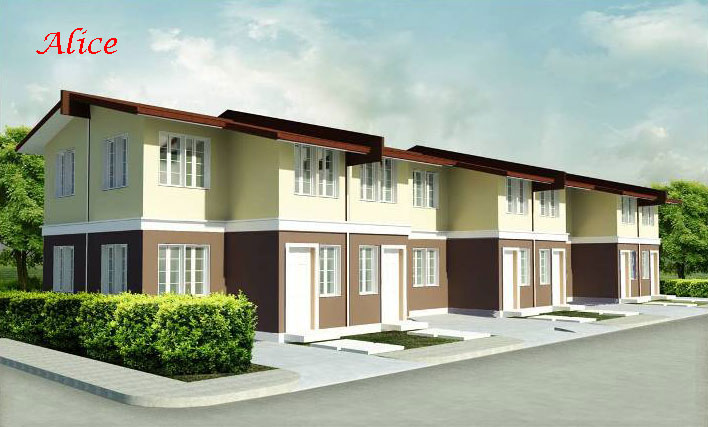
 ALICE: P966K
 LANCASTER VILLAGES is located in Lancaster Estates, a 150-hectare masterplanned community whose span covers Imus, Gen. Trias and Kawit in Cavite.
 DIANA MODEL: P1.3M
 ALEXANDRA: P3M
 ALICE: P966K

 CLUBHOUSE
 COLLEEN MODEL: P1.8M
 COUNTRY CLUB
 DIANA (corner lot)
HAVEN MODEL 


Thru: Bank and In-House Financing!
FREE SITE TRIPPING!
 
Moniq J. Festin
Licensed Real Estate Broker
Registration Number: 0003549
www.wowhouses.blogspot.com (click older posts)
Contact Numbers: Direct Line: 02-9852137
02-4000165
0922-8885188
0920-9523450
FREE HOUSE TRIPPING!
Laguna.Cavite.Silang.Tagaytay.Bulacan.Montalban.Condominiums in Metro Manila

April new private homes sales halved on-month!


Sales of new private homes, excluding executive condominiums, halved to 1,375 units in April, compared to March.

This was down from the record 2,793 units sold by developers in March, the highest monthly sale volume since June 2007.

According to the latest figures released by the Urban Redevelopment Authority, the April 2013 figure was also lower than the 2,497 new home sales recorded a year ago.

The drop was mainly due to the fewer units moved in the suburbs and city fringes in April.

URA data showed that developers sold 727 new private homes in April, down 60% from 1,814 in March. The number of new units moved in the city fringe region declined 43% to 470 units.

But the number of new private homes sold in the city area bucked the trend, rising by 13.4% to 178 units in April, compared to the month before.


Source: Channel News Asia

Minggu, 12 Mei 2013

So what is the acquisition cost when buying an apartment in Hong Kong?


The following is provided by IP Global, a firm set up in 2005 to provide clients with an end-to-end real estate investment service.

The data assume a foreign investor's (non permanent resident) costs on a US$ 1 million purchase. All costs are in US$.


Hong Kong
$240,000 or 24% of property value, comprising:

·         $75,000 stamp duty

·         $150,000 special buyers stamp duty

·         $5,000 legal fees

·         $10,000 agent fees


Singapore
$178,639 or 17.9% of property value, comprising:

·         $25,640 stamp duty

·         $150,000 special buyers stamp duty

·         $3,000 legal fees


New York
$44,250 or 4.4% of property value, comprising:

·         $18,250 transfer tax

·         $10,000 mansion tax

·         $16,000 legal fees


London
$43,400 or 4.3% of property value, comprising:

·         $40,000 stamp duty

·         $3,400 legal fees


Kuala Lumpur
$37,607 or 3.8% or property value, comprising:

·         $31,607 stamp duty

·         $6,000 legal fees

So it actually cost more for an investor to buy a property in Singapore than New York and London. And as per always, it is the lawyers in the Big Apple that make the biggest bucks..

Jumat, 10 Mei 2013

Resale markets continue to slow in April


Singapore's resale property market continues to slow as buyers remained on the sidelines after the government's latest round of property cooling measures.

Flash figures from the Singapore Real Estate Exchange (SRX) revealed that transaction volumes in both private and HDB resale markets fell last month.

Prices stayed fairly resilient as the overall median price of resale HDB flats inched up, while prices of resale private homes declined marginally in April compared to March

Meanwhile, analysts say a continued drop in HDB cash-over-valuation (COV) and slowing volumes are indicative of an imminent correction in HDB prices.

COV for HDB flats fell for the third consecutive month in April, according to SRX.

At $30,000, April's COV is at its lowest value since September 2012.

Still, overall median resale price of HDB flats inched up 1.1% to reach $465,000 in April. Resale volumes of HDB flats remained stable, with 1,271 units sold.

Year on year, transaction volumes slumped 36%. There were 2,000 HDB resale flats transacted in April 2012.

Earlier this year, the government lowered the mortgage servicing ratio (MSR), from 50 to 30%.

Mohammad Ismail, CEO at PropNex, said: "On average, banks would give 50% of someone's income to finance the monthly installment but that has been reduced to 30% and that's a drastic drop...and that causes a lot of people to think twice. It is very glaring that the public housing is heading for a correction in price. In another word, the heyday of double-digit growth is over. For that matter, even last year's 6-over percent growth is not likely to be repeated. Moving forward, public housing will probably experience low growth of probably 3 to 4%.

"The first quarter recorded the lowest volume of transactions in 15 years. We only recorded about 4,300 transactions whereas last year the average was in the tune of 6,500."

Meanwhile, resale transaction volumes for non-landed private homes in April slowed to 572 units, compared to the 614 units sold in March.

Year on year, this represented a more than 50% drop. There were 1,240 non-landed resale units in April 2012.

Donald Han, CEO of HSR Property Group, said: "This is directly impacted because of government measures on January 11. Investors who have properties are more reluctant to release these properties into the marketplace and because of that there has been a lack of supply for secondary markets that are available for transaction.

"A lot of investors are holding back the selling of secondary market property because if they sell it, it would be harder for them to buy back again because they would be imposed 10% ABSD for the second property."

Month on month, prices of resale private homes dipped 0.4% in April.

Resale prices of suburban private homes climbed 1.0% to end at $1,022PSF. But this was more than offset by declines in the city area and city fringes.

Both CCR (core central region) and RCR (rest of central region) saw equivalent price drops of 1.9% over the previous month to reach an average per square foot of $1,772 and $1,267 respectively.

This is the fourth consecutive monthly drop for CCR since its price peaked in December 2012.

Analysts say this is due to falling demand from foreign investors and permanent residents - who typically buy property in the core central region - as they have been affected by the additional buyer's stamp duty, where they are charged between a 7 and 15% tax.

Analysts say the resale private property market is likely to remain quiet as buyers continue to turn to new sales.

Source: Channel News Asia
 
 
On a related note, our de facto business newspaper has reported that overall rental prices slipped 1.0% in April. rental prices fell by 4.4% in RCR and by 0.9% in Outside Central Region (OCR) areas. But in CCR, rents picked up 2.1% to $4.79psf.
 
Rental yields softened in both RCR and OCR, while yields in CCR continued their climb to reach 3.25%. Despite yields softening, RCR still showed the highest gross yield of 3.73% as at April, followed by OCR's 3.68%.
 
Looking ahead, rents may soften further as more projects are completed, and as the tightened quota on foreign workers kicks in, leading to fewer of them coming here and needing accommodation.
Further, given that the supply of suburban homes has significantly increased, this will keep suburban rental prices down.
 
Not so good news for property investors...


Senin, 06 Mei 2013

Enbloc news: Yi Mei Garden


A freehold residential site at Tampines Road has been put up for collective sale by public tender.

The 14-storey development, Yi Mei Garden, is located near Kovan MRT and Heartland Mall.
ERA Realty Network, the marketing agent for the property, said the indicative price range for the plot is between $132 million and $135 million.

ERA said the development charge payable would work out to be between $750 and 758.00psf ppr.
The site occupies a land area of 78,030sqft and has a gross plot ratio of 2.1, according to the Master Plan 2008.

It can potentially yield an achievable proposed gross floor area (GFA) of 163,864sqft, which can potentially be re-developed into two towers.

Source: Channel News Asia


Minggu, 05 Mei 2013

Photos of Keppel Bay


The photos were taken from the Jewel Box on top of Mount Faber this evening, where the wife and I were celebrating our son's 9th birthday.


Now for Corals at Keppel Bay to complete the picture...


Have a great week ahead!

Kamis, 02 Mei 2013

And you think the biggest beneficiary of ABSD are first-time home buyers...


Our de facto English newspaper reported today that the raft of cooling measures imposed to tame the red-hot property market has delivered more than $1 billion in additional levies to the taxman.

The surge in revenue was bolstered following the additional buyer's stamp duty (ABSD) of up to 15% that was rolled out in January.

About $158 million in ABSD was netted in February and March, bringing the total until March to $1.03 billion since the tax was introduced in December 2011, according to the Inland Revenue Authority of Singapore (Iras).

The January measures - the seventh since September 2009 - also marked the first time that Singaporean investors buying their second homes were penalised with an additional tax.

Foreigners have forked out $580 million in ABSD for 3,041 homes from December 2011 to March this year, while Singaporeans and permanent residents (PRs) have stumped up $386 million for 7,269 homes, Iras noted. Non-individuals such as companies paid a further $66 million in levies for 285 units.

Home owners have also paid $66.6 million in seller's stamp duties since that levy was introduced in 2010.

This tax of up to 16% is meant to curb speculation and applies to those who sell their homes within four years of purchase.

Experts say the new-sale market has continued to be healthy despite the measures as developers dangle discounts and other incentives to alleviate the ABSD's sting.

Savills Singapore research head Alan Cheong estimates that 30 to 40% of buyers at new launches since the January measures came in are second, third or subsequent home buyers.

"They are creating reasons to buy. It could be for rental income when the population grows to over six million, capital gains or to hedge against the possibility of their children not being able to afford homes in the future," he said.

Iras said Singaporeans and PRs bought 1,031 homes subject to the ABSD in February and March, contributing $97.7 million in additional taxes. They are subject to ABSD rates ranging from 5 to 10%.

Foreigners, subject to a 15% ABSD for all purchases, bought 232 homes with a total of $58.2 million in ABSD collected in the same period. Non-individuals acquired 13 homes with a total of $1.84 million netted.

Foreigners seem to have retreated from the market after the applicable ABSD rate of 10% was increased to 15% in January.

In February and March last year, when only the 10% levy applied, they bought 315 units, according to caveats lodged with the Urban Redevelopment Authority, 36% more than this year.

So everytime you buy a car, our "cheng hu" makes money. And when you buy a  second or more private homes these days, our "cheng hu" makes even more money. So is this what the Chinese termed as "鹬蚌相争,渔翁得利" (The fisherman will benefit from the fight between the Mussel and Snipe)..?

And just in case your wondering where the Chinese idiom "鹬蚌相争,渔翁得利" came from:

Seven states were locked in battle at the end of the Warring States Period (220-280 AD). The Duke Hui of the State of Zhao wanted to conquer the State of Yan (Real Bad). That is, until he talked to Su Dai, one of those advisers.

Su said: "One fine day, a mussel went out to the beach to sunbathe. Meanwhile a snipe (which is a kind of bird that looks like a sandpiper with a long bill) caught sight of the tasty tidbit. He plunged to bite the meat. But the mussel immediately closed up, meaning the snipe could not pull out its beak out of the shell. Both of them became locked in mortal combat. Along came a fisherman and bagged them both.

"If you go to conquer Yan now, Zhao and Yan will be like the mussel and the snipe. Meanwhile the strong Qin State will be make like the fisherman and gobble up both territories."

And so Duke Hui never ate seafood again (just kidding). The idiom of course refers to a mutually-destructive battle between two parties, especially one involving unshakeable principles, thus leaving the coast clear for a third party to swoop in late and sweep up the spoils.

Explanation courtesy of SOHU.com